I just found year article which was written in 1954 and was republished this October 14 (2010). Video The article and it which are united are really interesting! There is length off Ingrid and present Roberto the twins, the Ingrid Rossellini and Isabella Rossellini with the public. Young stag video it: Be sour to check the article with the Web site off The Guardian.
Great classic films, best all time movies
Monday, December 6, 2010

Sunday, December 5, 2010
My preferred involved ones off the thirties years: #12
 I’ll admit it: I’m not a huge fan of The Three Stooges.A sacrilegious statement to some, and it’s not that I don’t like them. They just wear me out. The relentless physical humor is numbing after a while.Some may say the zany humor of the Marx Brothers can be wearying, but not to me. They are crazy, fun and unmistakably unique. Their move from Broadway to film at the dawn of the sound era was well-timed, and a second move from Paramount to MGM in the mid-1930s to work with the great Irving Thalberg resulted in one of their best films.Even in lesser films, they display flashes of comedic brilliance, and their on-screen personas were so well-honed that their movies remain classics of film comedy.The brothers ! were still performing their long-running Broadway hit “Animal Crackers†when Paramount began filming “The Cocoanuts†in New York, an adaptation of their 1925 stage hit. Released in 1929, their singular brand of craziness dazzled audiences and ushered in a new kind of screen comedy during the infancy of the talkies. It also featured an actress named Margaret Dumont, who would become the perfect “straight woman†to the Brothers. While the movie is stagy, like most movies of this time period, and the musical interludes an intrusion, the brothers’ comedic brilliance and vitality shine through.
 The next year, 1930, saw the film adaptation of “Animal Crackers.†Still stagy, it’s nevertheless a veh! icle for fun. The slim plot, about a stolen painting, is all t! hat hold s together one gag after another. Groucho gets to sing “Hooray for Captain Spalding,†while Chico and Harpo are involved in one of my all-time favorite scenes as they play bridge â€" or rather their own version of bridge (above) â€" with Dumont, showing just as much comedic flair.“Monkey Business†(1931) is the first of their films written especially for the screen. Despite the absence of Dumont, it’s a brisk, fun-filled romp as the brothers stowaway on a cruise ship. It’s also written by S.J. Perlman, who would pen “Horse Feathers†â€" a collegiate comedy â€" released the next year.“Duck Soup†continued the annual release schedule. The last film to feature Zeppo, with the welcome return of Dumont, and directed by Leo McCarey, this zany film revolves around one country declaring war on its neighbor just for fun. While we can see yet again the marvelous brilliance of the brothers at work, “Duck Soup†was a failure at the box office. Since “Horse Feat! hers†didn’t fly either, Paramount did not renew the brothers’ contract.Enter the great Thalberg. Oddly enough, Thalberg was not known for producing comedy or for showing a broad sense of humor. However, when Groucho went east to take a part in “Twentieth Century†â€" his first break from the team â€" Chico remained in Hollywood and struck up a friendship with Thalberg, who was convinced the brothers still had a future in film. Thalberg even wore down Louis B. Mayer, who agreed with Paramount that the brothers were through.Thalberg felt that while males liked the comedy, the lack of romance kept women away. Wary, the brothers went along with Thalberg. Then the plan was hatched that the brothers should get in the way of something classy, like the opera, and “A Night at the Opera†was born. However, the brothers were nervous about their return with new material, so Thalberg suggested they take the best comedy bits from the script on the road, performing it in fr! ont of live audiences, and then revising the material as neces! sary. Ev en then, the first screenings did not go well. But that changed when Thalberg, a genius in the editing room, ordered changes.
 The result? Arguably the brothers’ best-loved film, with the now-classic overflowing room on a ship sequence (above). The film was a smash, both critically and commercially, and the brothers were back on top even higher than before. “A Day at the Races†and “Room Service†followed, with the lesser-known “At the Circus†rounding out the decade.They would never achieve the movie heights reached during the 1930s, but what a comedic legacy they left. The plots were more or less there to provide a broad movie structure for the comedy to run wild. Instead of wearing me out, the Marx ! Brothers leave me craving more.

Great classic films, best all time movies
Take ton three: Emily Watson
Craig here with Take Three. Today: Emily Watson Take One: Upstairs 0 - Downstairs 1
 The Academy often doubles up with their supporting ladies â€" i.e. Weaver and Cusack for Working Girl, Farmiga and Kendrick for Up in the Air, and so on. It was true also for 2001’s Gosford Park's Helen Mirren and Maggie Smith. I always thought a third should’ve been added. Watson delivered five-star service and, for me, the film’s best performance by a country (house) mile. She played Elsie, the knowing, spirited maid that doomed homeowner Sir William (Michael Gambon) liked to see doing plenty of overtime.Among the film's interviewing mini-plots, Elsie’s narrative was an intriguing re! d herring, a side dish. But then Gosford Park wasn’t really about the murder as much as it was about class. Watson had plenty.
 Watson in Gosford ParkAltman’s film was packed wall-to-wall with high-level thesping and hidden somewhere in the pack was Watson effortlessly showing everybody up. Mirren was great, Smith very good, but Watson's was the most likeable, instinctive and vibrant turn. In Gosford Park Watson proves adept at making familiar type seem fresh and altogether vital. She’s always believable on screen. Mirren’s emotional resolution was Gosford Park’s sad closer, but Watson sent the film off on a more optimistic note. Take Two: Staring death in the face
 We were all was vi! cariously looking out for Watson’s character Reba McClane in! Red Dragon (2002). Given the circumstances, somebody needed to. Reba was the blind co-worker dubiously romanced by heavily-tattooed serial killer Francis Dolarhyde (Ralph Fiennes). Falling for the mentally-suspect mother’s boy was a mistake, sure, but appearances can be deceptive and Reba didn’t have the foresight. Their shared outsiderdom brought them together but with one major difference: he was madder than a box of frogs, she wasn’t; he went around watching other people’s home videos, gluing folk to wheelchairs then setting them on fire and eating paintings, she didn’t.
 Watson in Red DragonWatson was spot on in the role offering no concession to cliché, no unnecessary dwelling on the “disability†aspect, no life-affirming monologues. Instead she provides solid, amiable character acting. Her final moments, ! wondering aloud to Edward Norton whether she “drew a freakâ€, are brief but minutely heartbreaking. Watson turned a shopworn character, twice mislabelled a victim, into a full-bodied person, coloring her in with nuanced detail. Reba wasn’t just a pitiable blind girl. She was refreshingly knowing, slightly cynical and believably vulnerable in ways we don’t normally see.Take Three: Hard times, clean hands
 Grandiose, revisionist westerns made with lyrical verve, riper than thou character names and terse dialogue aren’t ten a penny these days, so it's best to relish them when they roll around. Ace Aussie oddity The Proposition (2005) was one of my films of 2006; Watson made my best actress list. Martha Stanley, the homely, nervy wife to Ray Winstone’s Captain was quietly electrifying. Here was a woman ill-ad! justed to frontier lief, stuck in the (out)back of beyond in a! godfors aken 1800s town built on violence. This delicate English flower wilted in the heat of the Australian desert. Emily's Martha gradually hardens to all that death and dust, but never accepts it. She’s one of writer Nick Cave’s best creations: like a doomed heroine in one of his murder ballads, but fleshed out and allowed to cautiously flourish.
 Watson in The PropositionEven though Martha was on the periphery of all the manly action, Hillcoat’s camera is still attentive to her. Through Watson’s beautifully underplayed performance we are granted access to her inner thoughts. When she overhears of her husband’s betrayal (concerning the flogging of a man believed to have raped and murdered her only friend), we not only witness her utter disbelief in cutaway, but the scene itself ends on her exhausted yet defiant stride out of her is! olated house. Her blue-brown dress is at elegant odds to the expansive, harsh desert terrain she heads towards.
 Watson in the bathWatson's performance is a set of emotive actions finely woven together. Watch the way she inspects her water-withered hands in the bath as she talks of her grief, the way her deathly dream virtually obliterates her own waking perception of events, how her brittle defiance turns to resigned revulsion during the flogging scene and, in the brutal climax, her frozen terror. The reality of how hard a slog life was for Martha is etched all over Emily's face. Three more key films for the taking: Breaking the Waves (1995), Hilary & Jackie (1998), Punchdrunk Love (2002)

Great c! lassic f ilms, best all time movies
Take One: Upstairs 0 - Downstairs 1The Academy often doubles up with their supporting ladies â€" i.e. Weaver and Cusack for Working Girl, Farmiga and Kendrick for Up in the Air, and so on. It was true also for 2001’s Gosford Park's Helen Mirren and Maggie Smith. I always thought a third should’ve been added. Watson delivered five-star service and, for me, the film’s best performance by a country (house) mile. She played Elsie, the knowing, spirited maid that doomed homeowner Sir William (Michael Gambon) liked to see doing plenty of overtime.Among the film's interviewing mini-plots, Elsie’s narrative was an intriguing re! d herring, a side dish. But then Gosford Park wasn’t really about the murder as much as it was about class. Watson had plenty.Watson in Gosford ParkAltman’s film was packed wall-to-wall with high-level thesping and hidden somewhere in the pack was Watson effortlessly showing everybody up. Mirren was great, Smith very good, but Watson's was the most likeable, instinctive and vibrant turn. In Gosford Park Watson proves adept at making familiar type seem fresh and altogether vital. She’s always believable on screen. Mirren’s emotional resolution was Gosford Park’s sad closer, but Watson sent the film off on a more optimistic note. Take Two: Staring death in the faceWe were all was vi! cariously looking out for Watson’s character Reba McClane in! Red Dragon (2002). Given the circumstances, somebody needed to. Reba was the blind co-worker dubiously romanced by heavily-tattooed serial killer Francis Dolarhyde (Ralph Fiennes). Falling for the mentally-suspect mother’s boy was a mistake, sure, but appearances can be deceptive and Reba didn’t have the foresight. Their shared outsiderdom brought them together but with one major difference: he was madder than a box of frogs, she wasn’t; he went around watching other people’s home videos, gluing folk to wheelchairs then setting them on fire and eating paintings, she didn’t. Watson in Red DragonWatson was spot on in the role offering no concession to cliché, no unnecessary dwelling on the “disability†aspect, no life-affirming monologues. Instead she provides solid, amiable character acting. Her final moments, ! wondering aloud to Edward Norton whether she “drew a freakâ€, are brief but minutely heartbreaking. Watson turned a shopworn character, twice mislabelled a victim, into a full-bodied person, coloring her in with nuanced detail. Reba wasn’t just a pitiable blind girl. She was refreshingly knowing, slightly cynical and believably vulnerable in ways we don’t normally see.Take Three: Hard times, clean handsGrandiose, revisionist westerns made with lyrical verve, riper than thou character names and terse dialogue aren’t ten a penny these days, so it's best to relish them when they roll around. Ace Aussie oddity The Proposition (2005) was one of my films of 2006; Watson made my best actress list. Martha Stanley, the homely, nervy wife to Ray Winstone’s Captain was quietly electrifying. Here was a woman ill-ad! justed to frontier lief, stuck in the (out)back of beyond in a! godfors aken 1800s town built on violence. This delicate English flower wilted in the heat of the Australian desert. Emily's Martha gradually hardens to all that death and dust, but never accepts it. She’s one of writer Nick Cave’s best creations: like a doomed heroine in one of his murder ballads, but fleshed out and allowed to cautiously flourish.Watson in The PropositionEven though Martha was on the periphery of all the manly action, Hillcoat’s camera is still attentive to her. Through Watson’s beautifully underplayed performance we are granted access to her inner thoughts. When she overhears of her husband’s betrayal (concerning the flogging of a man believed to have raped and murdered her only friend), we not only witness her utter disbelief in cutaway, but the scene itself ends on her exhausted yet defiant stride out of her is! olated house. Her blue-brown dress is at elegant odds to the expansive, harsh desert terrain she heads towards.Watson in the bathWatson's performance is a set of emotive actions finely woven together. Watch the way she inspects her water-withered hands in the bath as she talks of her grief, the way her deathly dream virtually obliterates her own waking perception of events, how her brittle defiance turns to resigned revulsion during the flogging scene and, in the brutal climax, her frozen terror. The reality of how hard a slog life was for Martha is etched all over Emily's face. Three more key films for the taking: Breaking the Waves (1995), Hilary & Jackie (1998), Punchdrunk Love (2002)Great c! lassic f ilms, best all time movies
24 Hours (1931): One day supplements with Hopkins and Francis
 Talented but temperamental actress Miriam Hopkins had the reputation of stealing scenes and chewing scenery throughout her prominent career. Her earliest days onscreen were no exception and as a bright and shiny new star at Paramount in the early 1930’s, she did not hide her light under a bushel. Making her film debut in 1930 in Fast and Loose with fellow Paramount pretty Carole Lombard ( Lombard had been in films for over half a decade by then), she had a hit in her second feature The Smiling Lieutenant (1931) co-starring movie novice Claudette Colbert. By her third film, she was the sure fire star of the show, even though Clive Brook and Kay Francis were billed ab! ove her. The film was called 24 Hours, and it was a prime example of pre-Code Paramount, with a great line-up of actors to boot.
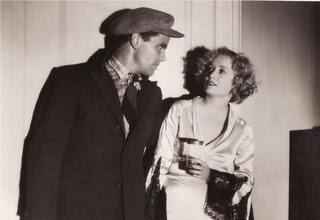 Jim and Fanny Towner (Brook and Francis) are a wealthy yet bored couple who are each involved in an extramarital affair. Jim’s alcoholism doesn’t help the problem and he finds solace with his paramour Rosie Duggan (Hopkins), a brassy speak easy singer, who is married to a weak and neurotic small time hoodlum named Tony (Regis Toomey, whose 40 year screen career began the year before this film was made). Tony is on the skids after his wife has the bouncer at the club where she works, toss him out on his keyster. Later that evening, she carries the! falling down drunk Jim home with her to see that he sleeps of! f his bu zz. When Tony comes aknockin’ in the middle of the night, crazed look in his eyes, he accidentally kills the two-timing torch singer, while her sugar daddy is passed out in the other room. He beats it when he realizes what he’s done, as does Jim when he awakes the next morning and realizes he could be blamed for the chanteuse’s demise.
 As much as a dramatic showcase 24 Hours is for Miriam Hopkins, Kay Francis has the tougher job of giving a more subtle yet still effective performance. To an extent she succeeds, but her character is written so that she has little more to do than look forlorn about the lack of love in both her marriage as well as her affair. Her dramatic gl! ory days would come with her tenure at Warner Brothers a few years later, a working relationship that was both extremely profitable as well as turbulent for the raven haired star. British born Clive Brook worked in silent films for years and made the transition to sound successfully. He looks rather bored in the first half of this film, but I suppose that is his job, as he is bored with his life AND his wife. (Brook made a telling statement about his profession in America when he said: "Hollywood is a chain gang and we lose the will to escape. The links of the chain are not forged with cruelties but with luxuries."). Although given a small role, veteran stage actress Lucille LaVerne gives the audience a visual once-over as Tony’s slovenly and tough-as-nails landlady. I recognized immediately her voice as that of the old hag in Walt Disney’s animated masterpiece Snow White and the Seven Dwarfs (1937). It was the last performance of her very lengthy caree! r, and the one for which she is most associated, as the animat! ors actu ally used the actress as a visual model for the crone.Based on the novel Twenty-Four Hours by Louis Bromfield, the film is a lost gem, a part of Paramount’s film library, owned by Universal/MCA, most of which are unreleased to the general public. Copies aren’t easy to find and when they are, the quality sometimes has much to be desired, but if you do get a chance to gander the charms of the young Mesdames Hopkins and Francis, I’d jump at it.

Great classic films, best all time movies
My preferred involved ones off the thirties years: #12
I’ll admit it: I’m not a huge fan of The Three Stooges.A sacrilegious statement to some, and it’s not that I don’t like them. They just wear me out. The relentless physical humor is numbing after a while.Some may say the zany humor of the Marx Brothers can be wearying, but not to me. They are crazy, fun and unmistakably unique. Their move from Broadway to film at the dawn of the sound era was well-timed, and a second move from Paramount to MGM in the mid-1930s to work with the great Irving Thalberg resulted in one of their best films.Even in lesser films, they display flashes of comedic brilliance, and their on-screen personas were so well-honed that their movies remain classics of film comedy.The brothers ! were still performing their long-running Broadway hit “Animal Crackers†when Paramount began filming “The Cocoanuts†in New York, an adaptation of their 1925 stage hit. Released in 1929, their singular brand of craziness dazzled audiences and ushered in a new kind of screen comedy during the infancy of the talkies. It also featured an actress named Margaret Dumont, who would become the perfect “straight woman†to the Brothers. While the movie is stagy, like most movies of this time period, and the musical interludes an intrusion, the brothers’ comedic brilliance and vitality shine through. The next year, 1930, saw the film adaptation of “Animal Crackers.†Still stagy, it’s nevertheless a veh! icle for fun. The slim plot, about a stolen painting, is all t! hat hold s together one gag after another. Groucho gets to sing “Hooray for Captain Spalding,†while Chico and Harpo are involved in one of my all-time favorite scenes as they play bridge â€" or rather their own version of bridge (above) â€" with Dumont, showing just as much comedic flair.“Monkey Business†(1931) is the first of their films written especially for the screen. Despite the absence of Dumont, it’s a brisk, fun-filled romp as the brothers stowaway on a cruise ship. It’s also written by S.J. Perlman, who would pen “Horse Feathers†â€" a collegiate comedy â€" released the next year.“Duck Soup†continued the annual release schedule. The last film to feature Zeppo, with the welcome return of Dumont, and directed by Leo McCarey, this zany film revolves around one country declaring war on its neighbor just for fun. While we can see yet again the marvelous brilliance of the brothers at work, “Duck Soup†was a failure at the box office. Since “Horse Feat! hers†didn’t fly either, Paramount did not renew the brothers’ contract.Enter the great Thalberg. Oddly enough, Thalberg was not known for producing comedy or for showing a broad sense of humor. However, when Groucho went east to take a part in “Twentieth Century†â€" his first break from the team â€" Chico remained in Hollywood and struck up a friendship with Thalberg, who was convinced the brothers still had a future in film. Thalberg even wore down Louis B. Mayer, who agreed with Paramount that the brothers were through.Thalberg felt that while males liked the comedy, the lack of romance kept women away. Wary, the brothers went along with Thalberg. Then the plan was hatched that the brothers should get in the way of something classy, like the opera, and “A Night at the Opera†was born. However, the brothers were nervous about their return with new material, so Thalberg suggested they take the best comedy bits from the script on the road, performing it in fr! ont of live audiences, and then revising the material as neces! sary. Ev en then, the first screenings did not go well. But that changed when Thalberg, a genius in the editing room, ordered changes.The result? Arguably the brothers’ best-loved film, with the now-classic overflowing room on a ship sequence (above). The film was a smash, both critically and commercially, and the brothers were back on top even higher than before. “A Day at the Races†and “Room Service†followed, with the lesser-known “At the Circus†rounding out the decade.They would never achieve the movie heights reached during the 1930s, but what a comedic legacy they left. The plots were more or less there to provide a broad movie structure for the comedy to run wild. Instead of wearing me out, the Marx ! Brothers leave me craving more.Great classic films, best all time movies
Saturday, December 4, 2010
Archivistic length off Ingrid and Roberto with the twins
I just found year article which was written in 1954 and was republished this October 14 (2010). Video The article and it which are united are really interesting! There is length off Ingrid and present Roberto the twins, the Ingrid Rossellini and Isabella Rossellini with the public. Young stag video it: Be sour to check the article with the Web site off The Guardian.
Great classic films, best all time movies
Great classic films, best all time movies
10 completely random things butt me and my obsession with old films
For the most part, I seem to spend about 88% of my time, either watching an old movie or talking about it. That small percentage away from old movies, I do obsess over other things... I swear! XD Anywho... here is the randomness of me, Enjoy! 1. Addicted is probably not strong enough a word to describe how much I utterly adore Marina and the Diamonds. Her music is just so brilliant and interesting, in that I've never quite heard music like hers before. There doesn't go a day, without me listening to at least one of her songs. Some of her songs, I can relate to so well, and they are just so much fun to listen to. Recommended Songs: I would say her an entire album(The Family Jewels) but if you want to hear her absolute best, then I would sugges! t listening to either, "I am Not a Robot", or "Oh No!"2. If I could be any two characters, from any movie, they would be: Nora Charles in "The Thin Man'' and Ann Lemp in "Four Daughters". 3. Favorite Leading Man of the 1940's(Not Including Jeffrey Lynn!) would definitely be Cary Grant, Robert Cummings, and William Prince.
 4. Two actors, that I wish could have worked together would be Myrna Loy and Humphrey Bogart, Myrna Loy and Jeffrey Lynn, and Jeffrey Lynn and Jean Harlow 5. The 1930's are my favorite style decade, with the 1960's close behind.6. If I could steal away any Myrna Loy look, it would be her amazingly brilliant striped dress, she wore in "The Thin Man". As a matter of fact, I would steal her entire wardrobe from that film. 7. I pr! efer watching Jeffrey Lynn in his more comedic roles, such as ! his role in "Four Daughters" or his very uptight role in "It All Came True". Even when his character is tensed up, the environment of the film is lighthearted. 8. I survive solely on these four shows: "CSI", "Infomania", "Deadly Women", and "Glee".( I confess to being an informative Deadly CSIer Gleek and I'm quite proud to admit it!) 9. I will NEVER read or watch anything to do with "Twilight". All I have to say to that is, BLEH!10. I HATE HATE HATE Peanut Butter!I know, you were not expecting that last one, were you???? Hahaha :D It's all in good fun, so if you want to join in, come on and have some fun! ;)

Great classic films, best all time movies
Recommended Songs: I would say her an entire album(The Family Jewels) but if you want to hear her absolute best, then I would sugges! t listening to either, "I am Not a Robot", or "Oh No!"2. If I could be any two characters, from any movie, they would be: Nora Charles in "The Thin Man'' and Ann Lemp in "Four Daughters". 3. Favorite Leading Man of the 1940's(Not Including Jeffrey Lynn!) would definitely be Cary Grant, Robert Cummings, and William Prince.4. Two actors, that I wish could have worked together would be Myrna Loy and Humphrey Bogart, Myrna Loy and Jeffrey Lynn, and Jeffrey Lynn and Jean Harlow 5. The 1930's are my favorite style decade, with the 1960's close behind.6. If I could steal away any Myrna Loy look, it would be her amazingly brilliant striped dress, she wore in "The Thin Man". As a matter of fact, I would steal her entire wardrobe from that film. 7. I pr! efer watching Jeffrey Lynn in his more comedic roles, such as ! his role in "Four Daughters" or his very uptight role in "It All Came True". Even when his character is tensed up, the environment of the film is lighthearted. 8. I survive solely on these four shows: "CSI", "Infomania", "Deadly Women", and "Glee".( I confess to being an informative Deadly CSIer Gleek and I'm quite proud to admit it!) 9. I will NEVER read or watch anything to do with "Twilight". All I have to say to that is, BLEH!10. I HATE HATE HATE Peanut Butter!I know, you were not expecting that last one, were you???? Hahaha :D It's all in good fun, so if you want to join in, come on and have some fun! ;) Great classic films, best all time movies
Subscribe to:
Posts (Atom)